Missing teeth change more than your smile — they affect how you eat, speak, and how your facial structure holds up over time. Adults lose teeth for many reasons, including decay, gum disease, or injury, and replacing those teeth is about more than aesthetics. Dental implants are a modern, reliable way to restore both the form and function of natural teeth so patients can return to everyday activities with confidence.
Implants are a versatile option for people who need to replace one tooth, several teeth, or an entire arch. Because implants anchor into the jawbone, they reproduce the support provided by natural tooth roots, which helps preserve bone volume and the contours of the face. For many patients, that structural benefit is as important as the visible improvement.

At Lake Advanced Dentistry we approach implant care with careful planning and clear communication. Every treatment plan is individualized — we assess your oral health, overall medical history, and personal goals to design a predictable pathway from consultation to long-term maintenance.
Unlike removable dentures or traditional fixed bridges, dental implants replace the missing tooth root as well as the visible crown. That root-like support is why an implant can feel and function so much like a natural tooth. Implants support crowns, bridges, and overdentures while minimizing the need to alter healthy adjacent teeth.
Because of this root-level support, implants transfer chewing forces into the jawbone in a natural way. That stimulation helps prevent the bone loss that can occur after tooth extraction, keeping the jaw stronger and preserving facial proportions over time.
Many patients appreciate the durability and day-to-day convenience of implants. They eliminate the slipping and adhesive dependence of some removable prostheses and restore speech, bite strength, and eating comfort more reliably than many alternatives.
Dental implants are crafted from biocompatible materials that the body accepts and bonds to — a process called osseointegration. After a carefully placed implant is set into the jaw, microscopic bone growth gradually fuses with the implant surface, creating a stable foundation for a restoration. This biological fusion is what gives implants their exceptional functional reliability.
The timeline for osseointegration varies with the site, bone quality, and individual healing, but it's an essential phase that determines when a final crown or bridge can be attached. In some situations, temporary restorations provide immediate appearance and partial function while the implant integrates.
Because implants become part of the jaw structure, they can support natural chewing forces without shifting. That reliability is why dentists commonly recommend implants for patients seeking a durable, long-term solution rather than a short-term fix.
Patients frequently choose implants for practical, everyday reasons: better chewing ability, clearer speech, and a more secure bite. Restorations supported by implants let people eat a wider variety of foods comfortably, which supports nutrition and enjoyment of meals.
Implants also remove many of the social inconveniences associated with removable appliances. There is no adhesive to manage, no risk of unexpected slipping, and no need to remove appliances for cleaning. Instead, implants are cared for with the same daily hygiene habits used for natural teeth.
Another important advantage is longevity. With proper oral hygiene and routine dental care, implants can provide a durable solution that lasts many years — in many cases for a lifetime. Regular check-ups let your dental team monitor the health of the implant and surrounding tissues to maintain long-term success.
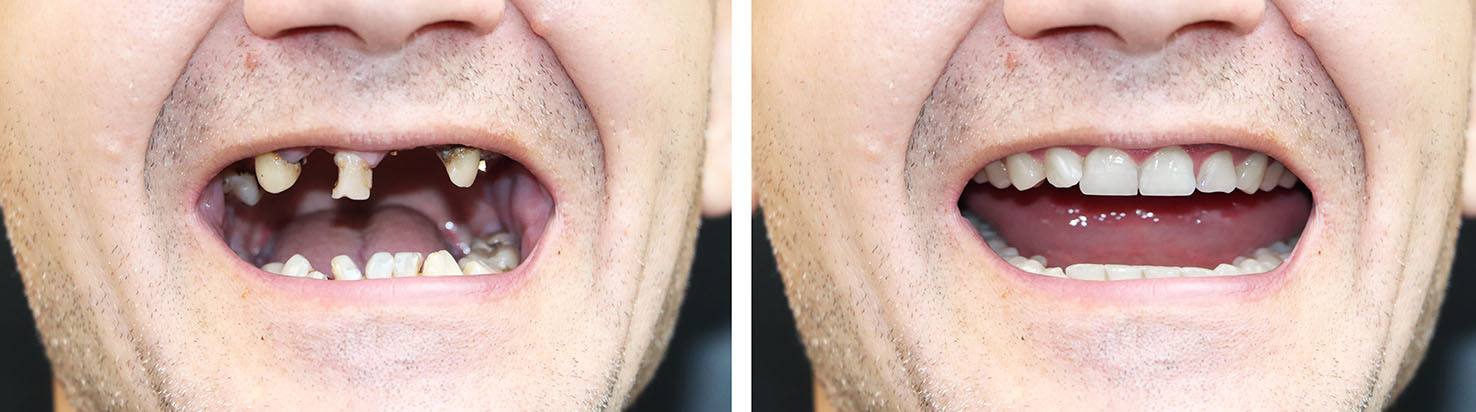
Implant therapy is not one-size-fits-all. Treatment can be tailored to fit single-tooth replacement, multiple missing teeth, or complete-arch restoration. Your dental team will present options that balance functional goals with long-term oral health, always prioritizing conservative approaches when possible.
For single missing teeth, an implant topped with a ceramic crown restores form and function without involving neighboring teeth. For several missing teeth, implant-supported bridges recreate contiguous segments of dentition while preserving surrounding bone. For patients missing most or all teeth, full-arch solutions provide fixed or removable options anchored by a small number of strategically placed implants.
Choosing between a fixed restoration and an implant-retained removable prosthesis depends on preferences for permanence, hygiene access, and maintenance. Your dentist will review the pros and cons of each approach and help you select the solution best aligned with your daily life and oral condition.
Most adults who are in generally good health and have adequate jawbone can be excellent candidates for implants, but the best way to know is through a comprehensive evaluation. That assessment reviews medical and dental history, gum health, bone volume, and lifestyle factors to determine the safest and most effective plan.
When additional support is needed for long-term stability, preparatory procedures such as ridge augmentation or sinus lifts can build a solid foundation. These site-development techniques are common and reliable ways to enable implant placement where bone volume is reduced.
Your care team will discuss anesthesia and sedation options to keep you comfortable during surgical steps. We provide clear pre- and post-operative guidance so you know what to expect and how to support healing at every phase.
Implant treatment begins with careful planning — digital imaging and diagnostic records guide precise implant placement. Surgery is typically performed on an outpatient basis and can range from minimally invasive placement for a single implant to more involved procedures when multiple implants are required. After placement, a period of healing allows the implant to integrate with the jaw before the final restoration is attached.
Long-term success depends on routine care: daily brushing and flossing, along with regular professional check-ups and cleanings. Your dentist will recommend a personalized maintenance schedule and check for factors that could affect implant health, such as gum inflammation or occlusal stress.
Bone loss in an extraction socket or from periodontal disease can compromise implant placement. In those cases, bone grafting can restore volume and density to support a secure implant. Grafting materials and techniques are selected based on the specific needs of the site and the desired timeline for implant placement.
By rebuilding the supporting bone, grafting not only enables implant placement but also helps preserve facial contours and long-term aesthetics. The decision to graft is made after careful evaluation and discussion of the expected outcomes and healing process.
Dental implants offer a durable, natural-feeling solution when teeth are lost. If you are considering implant therapy or want to learn which approach best fits your needs, our team can guide you through a thoughtful evaluation and personalized treatment plan. Contact us to request more information or to schedule a consultation — we’re happy to answer your questions and help you take the next step toward a restored, confident smile.


If you've lost a tooth due to injury, decay, gum disease, or any other reason, we recommend dental implants to replace missing teeth. Dental implants come the closest to replicating the look, feel, and function of your natural teeth.
Dental implants are placed into the jawbone and mirror the same function as the root of a tooth. The procedure for dental implants is usually performed while a patient is sedated. Patients who undergo IV sedation must have an empty stomach and transportation home following the procedure. Most sedation patients will have little to no memory of the procedure occurring.
Generally, dental implants are made out of a biocompatible metal such as titanium. Biocompatible metals are also used for other common bone implants (such as shoulder, hip, and knee replacements). The visible portion of the implant is usually made out of porcelain and is custom-made to match your existing teeth.
Dental implants are designed to fuse to the bone, which makes them become permanent fixtures. Typically speaking, the success rate is nearly 100%. There are few cases in which the implant will not fuse as intended and must be removed. If this happens to occur, the procedure can be attempted again a few months later.
Dental implants are not usually covered by dental insurance, but may be covered under a patient's medical insurance. Our office and your insurance company can discuss coverage options with you based on your individual case and treatment plan.
It's easy... just take care of an implant as if it's a natural tooth! This involves regular brushing, flossing, and dental checkups. If you have any concerns about your implant, contact us immediately.
Dental implants are biocompatible posts surgically placed in the jaw to act as artificial tooth roots. A custom crown, bridge, or denture is attached to the implant to restore the visible portion of the tooth. This combination of root-level support and prosthetic restoration recreates the look and function of a natural tooth.
Because implants integrate with the bone, they provide stability for chewing, speaking, and everyday use that closely resembles natural teeth. Implants also help preserve jawbone volume and facial contours by transmitting biting forces into the bone. For many patients, that structural benefit is as important as the cosmetic improvement.
Most adult patients who are in generally good health and free of uncontrolled systemic conditions are potential candidates for implants. Adequate jawbone volume and healthy gums are important considerations, though deficiencies can often be addressed with bone grafting or sinus lift procedures. A comprehensive evaluation, which includes medical history, dental exam, and imaging, determines candidacy and helps formulate a personalized plan.
Lifestyle factors such as smoking or certain medications can affect healing and may be managed before or during treatment to improve outcomes. Patients with active gum disease must first achieve periodontal health to reduce the risk of implant complications. Ultimately candidacy is determined case by case to ensure a safe and predictable result.
Initial care begins with a consultation where diagnostic imaging and clinical assessment guide treatment planning. The dental team evaluates bone anatomy, gum health, and restorative needs to select implant size, position, and timing for any preparatory procedures. When indicated, bone grafting or tooth extractions are scheduled before implant placement to create a stable foundation.
Implant placement is performed under appropriate anesthesia or sedation and typically involves attaching the implant to the jawbone followed by a healing interval for osseointegration. After integration, a custom abutment and final restoration are fitted to restore form and function, with temporary prostheses used when immediate esthetics are desired. The process emphasizes precision, communication, and stepwise milestones to achieve durable results.
Osseointegration is the biological process by which bone grows onto the surface of a biocompatible implant, creating a direct structural connection. This fusion stabilizes the implant within the jaw and provides the foundational support needed to bear normal chewing forces. The degree and timeline of integration depend on bone quality, implant design, and individual healing characteristics.
Successful osseointegration is key to the long-term reliability of implant restorations because it prevents micro-movement and reduces the risk of implant failure. Clinicians monitor integration through clinical exams and imaging to decide when to place the final restoration. Maintenance of healthy surrounding tissues and avoidance of excessive occlusal stress help preserve integration over time.
Dental implants differ from traditional dentures and fixed bridges by replacing the tooth root as well as the crown, which provides superior stability and preserves bone. Unlike removable dentures, implant-supported restorations do not rely on adhesives and are less likely to shift during speech or eating. When compared with conventional bridges, implants avoid altering adjacent healthy teeth for support.
Implants can improve function, comfort, and oral hygiene access because restorations are secured to anchored posts and cared for like natural teeth. Different prosthetic designs offer fixed or removable options to suit patient preferences for permanence and cleaning. The clinical choice depends on the patient’s oral health, anatomy, and restorative goals.
Restorations range from single crowns and implant-supported bridges to full-arch fixed prostheses and implant-retained overdentures. Single crowns replace an individual tooth, while bridges use two or more implants to support contiguous missing teeth. Full-arch protocols commonly use four to six implants to anchor a fixed or hybrid prosthesis that restores an entire upper or lower arch.
Implant-retained overdentures provide a removable option that snaps onto attachments for improved retention and easier hygiene compared with traditional dentures. Temporary solutions may be used during healing to maintain esthetics and partial function until the final restoration is ready. Your dentist will review the advantages and maintenance demands of each restoration type to match your preferences and clinical needs.
With proper oral hygiene and regular professional care, implants are designed to be a long-term solution and often last for many years or decades. Factors that influence longevity include oral hygiene practices, gum health, systemic conditions, smoking, and the quality of the supporting bone. Prosthetic components such as crowns or attachments may require periodic replacement due to wear even when the implant fixture remains stable.
Routine dental visits allow clinicians to detect early signs of inflammation, occlusal problems, or loose components and address them before they compromise the implant. Avoiding habits that generate excessive forces, such as bruxism or chewing hard objects, helps protect both the implant and the restoration. A personalized maintenance plan supports durable outcomes and helps identify when intervention may be needed.
Most patients experience mild to moderate discomfort and swelling that subsides over several days and can be managed with prescribed or over-the-counter medications and cold compresses. Eating soft foods and following post-operative instructions for oral hygiene and activity help promote healing and reduce complications. Stitches may be removed or dissolve on their own depending on the technique used.
Osseointegration takes several weeks to months, during which time temporary restorations may be used to preserve appearance and limited function. You will have follow-up visits to monitor healing, assess tissue health, and determine the appropriate timing for the final restoration. Clear guidance on wound care and when to report concerning signs ensures a smooth recovery.
Daily brushing and flossing around implant restorations are essential, and using interdental brushes or specialized floss may help clean under bridges or around attachments. Avoiding tobacco and managing medical conditions like diabetes supports tissue health and reduces the risk of implant complications. Regular professional cleanings and examinations allow early detection of gum inflammation or mechanical wear.
Your dental team may recommend specific tools or techniques to access areas around implants and will establish a recall schedule based on your individual risk factors. Maintaining stable occlusion and addressing parafunctional habits protects the restoration from excessive stress. Proactive maintenance is the most reliable way to preserve implant function and oral health long term.
Treatment personalization begins with a comprehensive assessment of medical history, dental condition, bone anatomy, and esthetic goals to identify the safest and most effective approach. Advanced imaging and diagnostic records guide implant selection, placement angles, and the design of the final restoration, while preparatory procedures are planned when needed to optimize outcomes. The treatment plan balances function, appearance, and long-term health priorities.
At Lake Advanced Dentistry our clinicians discuss anesthesia and sedation options, timeline expectations, and postoperative care so patients understand each step and feel comfortable with their plan. We tailor follow-up intervals and hygiene recommendations to each patient's healing response and risk profile, and we coordinate with specialists when a multidisciplinary approach benefits the case. Clear communication and individualized protocols help achieve predictable, lasting results.

Ready to schedule your next dental appointment or have questions about our services?
Contacting Lake Advanced Dentistry is easy! Our friendly staff is available to assist you with scheduling appointments, answering inquiries about treatment options, and addressing any concerns you may have. Whether you prefer to give us a call, send us an email, or fill out our convenient online contact form, we're here to help. Don't wait to take the first step towards achieving the smile of your dreams – reach out to us today and discover the difference personalized dental care can make.